| |
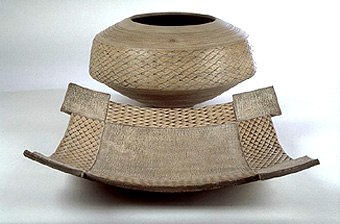
Early Works Circa 1982 |
|
| |
|
|
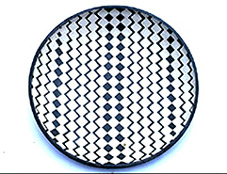
50cm |
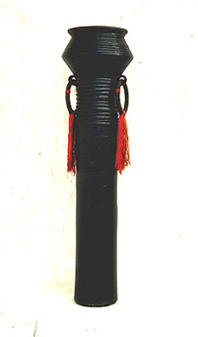
65cm |
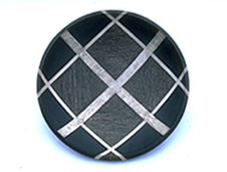
50cm | |
| |
|
|
|
| |
|
|
| |
Raku |
|
| |
|
|
| |
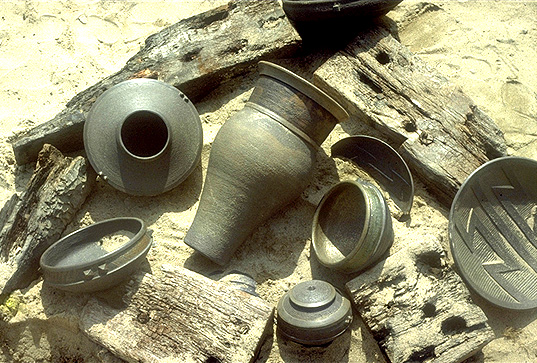
Excavations Series
1984 - 1990 |
|
| |
|
|
|
|
| |
Group on sand 1990 |
|
| |
|
|
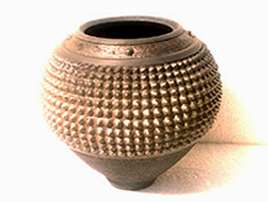
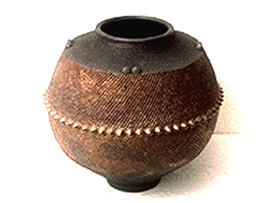
| 'Raku is particularly appealing for its dramatic
technique. I pull the red hot pot from the kiln at 1000 centigrade
and throw it outside into a pit of sawdust, then cover it with more
sawdust until no air can reach the pot. The highly grogged body of
the clay somehow manages to survive the thermal shock involved. The
surface is subject to highly oxygen reduced atmospheric conditions
which draw the metallic oxides up to the surface, revealing all
manner of metallic lustres, which sit very well on the scorched and
blackened clay body. The result has a raw feeling of something
geological, archaeological, volcanic or vulcan. Something which has
been to hell and back and survived. I take these pots to point of
destruction and then just ease back a little'. |
| |
|
|
| |
|
|
 |
|
 |
|
32cm 1989 |
|
30cm 1990 | |
| |
|
|
| |
|
|
|
| |
|
|
|
Whiteware
1992 - 2002 |
| |
|
|
|
|
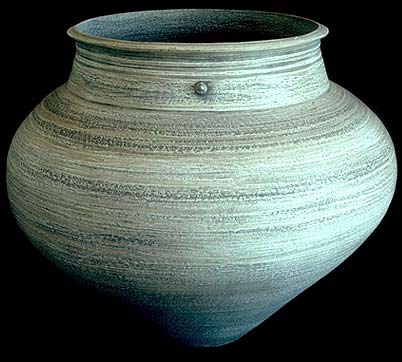
66cm |
| |
| |
|
|
| Inspiration for surface texture often comes from the
landscape, maybe the marks on a slab of granite in a field, or
stones worn smooth by water down by the sea. I find that the
bleached white bones of animals found high on the moorland and the
dull glint of a creamy white shell are worthy of closer
inspection. |
| |
| |
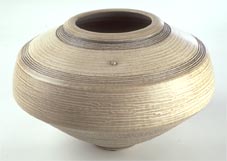
52cm |
|
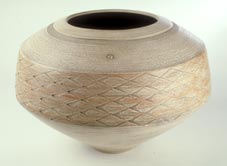
52cm | |
| |
|
|
|
| |
|
| |